Every year, 19,500 people in Wales are diagnosed with cancer – making it a key priority for our government and healthcare services.

I’ve worked as a part of our Sector Intelligence team to research and craft reports telling you what you need to know about cancer care, which we’ve broken down into four blogs with some of their key insights, facts and trend.
This kicks off with my blog covering the cancer innovation landscape in Wales and beyond. Our ageing population and changing lifestyles will likely lead to cancer rates continuing to rise. Innovation to improve screening, diagnosis and treatment could reduce these existing and future pressures felt by the NHS and make life better for patients and their loved ones.
Innovation in cancer screening
Screening can help detect cancer at an earlier stage, improving treatment success. In Wales, we have programmes for bowel, breast and cervical cancers, with research showing that they cut cancer mortality rates.
The report covers work underway to extend screening programmes to other cancers, such as lung cancer screening set to be introduced in Wales following successful pilots. There’s also ongoing development of prostate cancer screening through the TRANSFORM trial and multi-cancer detection tests like the ongoing NHS Galleri trial.
There’s exciting innovation in the pipeline to improve the effectiveness and efficiency of screening programmes. This includes using artificial intelligence (AI) to analyse images in existing lung screening programmes, where patients traditionally have a CT scan reviewed by a rained radiologist. AI programmes such as Aidence’s Veye Nodules or Qure.ai can help analyse these. NICE demonstrated that using AI alongside a clinical review can be more effective and cheaper. One report found that it could make efficiencies of roughly 17%. However, more evidence, alongside cultural and legislative change, is needed to rely on AI to analyse images without review from a radiologist.
Improving cancer screening accessibility is also important. This includes at-home testing tools, which could improve uptake and reduce trips to primary and secondary care settings.
The YouScreen clinical trial offered human papillomavirus (HPV) self-sampling test kits to people six months overdue for cervical screening, with a return rate of over 65%. This is important as computer modelling showed a 10% uptake could lead to a 40% reduction in deaths. Another example is the EndoSign capsule sponge, a swallowable sponge on a string to screen for upper gastrointestinal cancer, which clinical studies are currently assessing.
Increasing screening, uptake and ultimately detection of early-stage cancer through innovation, will impact clinical demand. False positives can also lead to unnecessary treatment and health anxiety. In some cases, it’s unclear whether the harms of overdiagnosis through tools like mammography in over 70s outweigh the benefits of screening.
Innovation in cancer diagnosis
The report explores diagnosis innovation, where AI is a huge theme. Trained clinicians currently use it to support their job and not as a standalone tool, but this could change in future to reduce workload. Other potential uses include analysing patients’ Electronic Health Record data for potential missed symptoms and creating ‘virtual biopsies’ from CT scans. However, there’s still limited evidence gaps that need filling. This highlights the challenge of NHS technology adoption as clear evidenced clinical benefit is essential but can take several years to generate.
Liquid biopsies, such as those in the QuicDNA programme, use accessible bodily fluids to diagnose, eliminating the need for invasive biopsies. However, it’s impact on healthcare systems is still unclear and it only provides information about a specific cancer biomarker so can’t replace tissue biopsies.
Innovation in cancer monitoring
Catching cancer earlier means more monitoring and follow-up appointments. Wearables such as watches and mobile technology to track patients’ vital signs is one area of innovation to help keep care closer to home and identify side effects earlier.
Huma technology is one example, which collects patient data using questionnaires and connected sensors that clinicians review through a web portal. Research found that using technology like this could save the resource of 339 full time members of staff – freeing up time so they can deliver other care. Broader analysis into remote monitoring in oncology care across Europe also found that patients and healthcare providers used the system well, leading to more timely management of symptoms and better clinical outcomes.
Remote monitoring and telehealth can be combined to create virtual wards where patients receive hospital-level care in their own home. Technology means clinicians can monitor, communicate and intervene with cancer patients outside of hospital, keeping an eye on side effects. Research has largely shown that it reduces costs and can also demonstrate positive outcomes in patient safety.
Innovation in cancer treatment
Advanced therapies for treating cancer is a focus, where it can replace, regenerate and re-engineer cells and genes to fight cancer and get the body back to normal functions.
CAR-T cell therapy has been used in Wales since 2019. And the number of approved treatments continue to rise. Up to 10,000 in the UK could be treated by these therapies each year by 2030, up from 2,500 people in 2021. However, big challenges are cost and that clinical trials are done in short time frames, making it hard to assess long-term benefits.
Cancer vaccines are another innovation area. Early-stage trials show that they’re well tolerated with fewer side effects compared to current treatments. None are NHS approved but clinical trials are underway including a colorectal cancer vaccine trial that is recruiting in Velindre Cancer Centre.
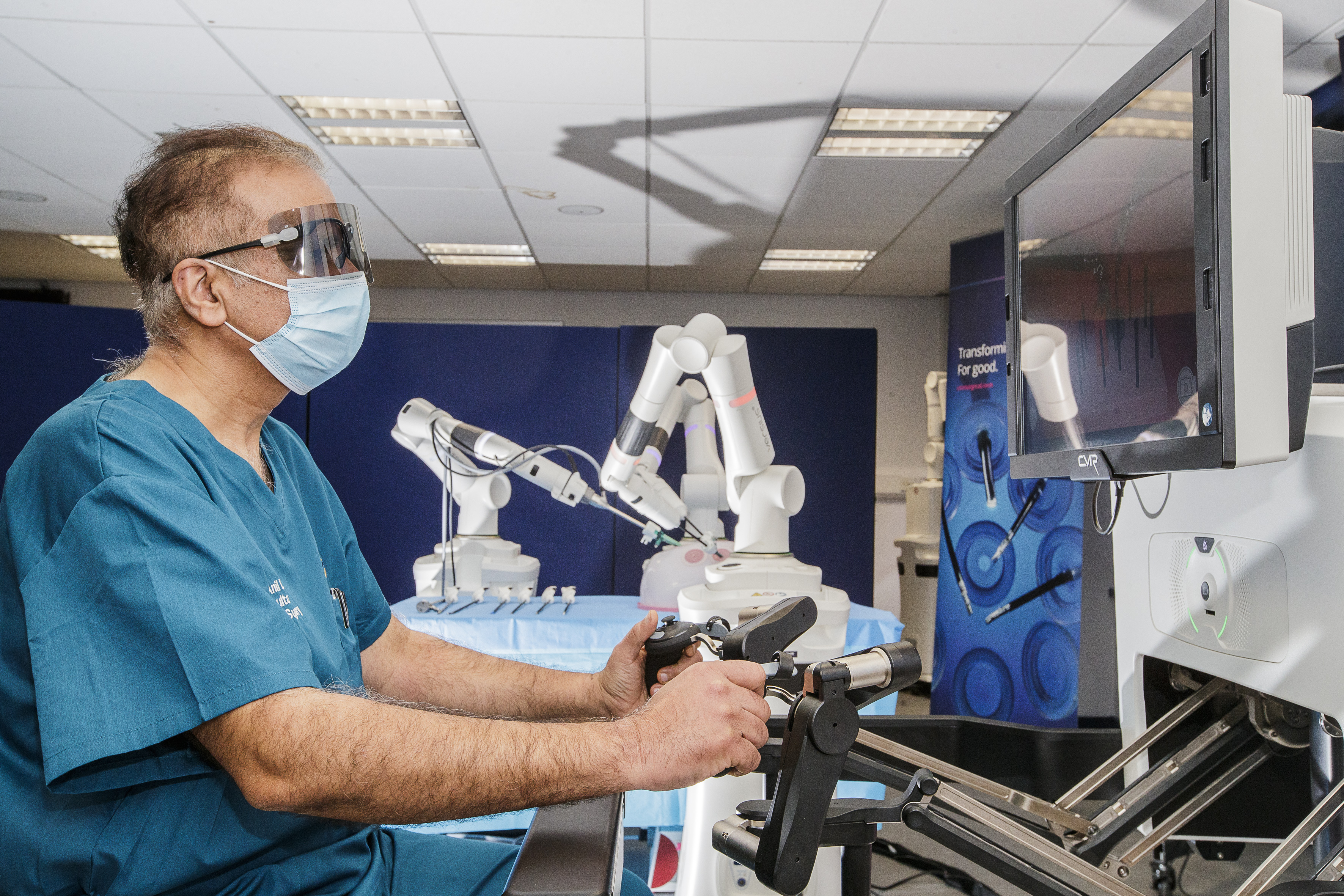
Surgical robots are also improving cancer care. They perform minimally invasive procedures with smaller incisions leadings to less pain and fewer complications – ultimately leading to faster recovery. Within Wales, robotic-assisted surgery is treating gastrointestinal, urological and gynaecological cancers. Human surgeons still control these but in time they could become automated and integrated with AI to help plan surgeries and assist with real-time decision making. However, just like with advanced therapies, cost poses a huge challenge. Will it outweigh the benefits? A 2024 paper identified that robotic assisted prostatectomy could lead to increased labour productivity and reduced length of stay when compared to standard laparoscopic surgery, although evidence of improved clinical outcomes was limited.
Reflections on innovation in cancer care
We can see there’s a brilliant mix of exciting innovation in cancer care. However, it can also be difficult to assess the long-term impact of these technologies – often a necessity for large-scale adoption. Large-scale and long-lasting clinical trials can support and address this gap to help decision makers approve innovation that can make a real difference and help people live healthier and happier lives.