



Three innovative projects aimed at improving stroke care for patients across Wales have been awarded funding following the country’s first ever Stroke Technology Symposium.
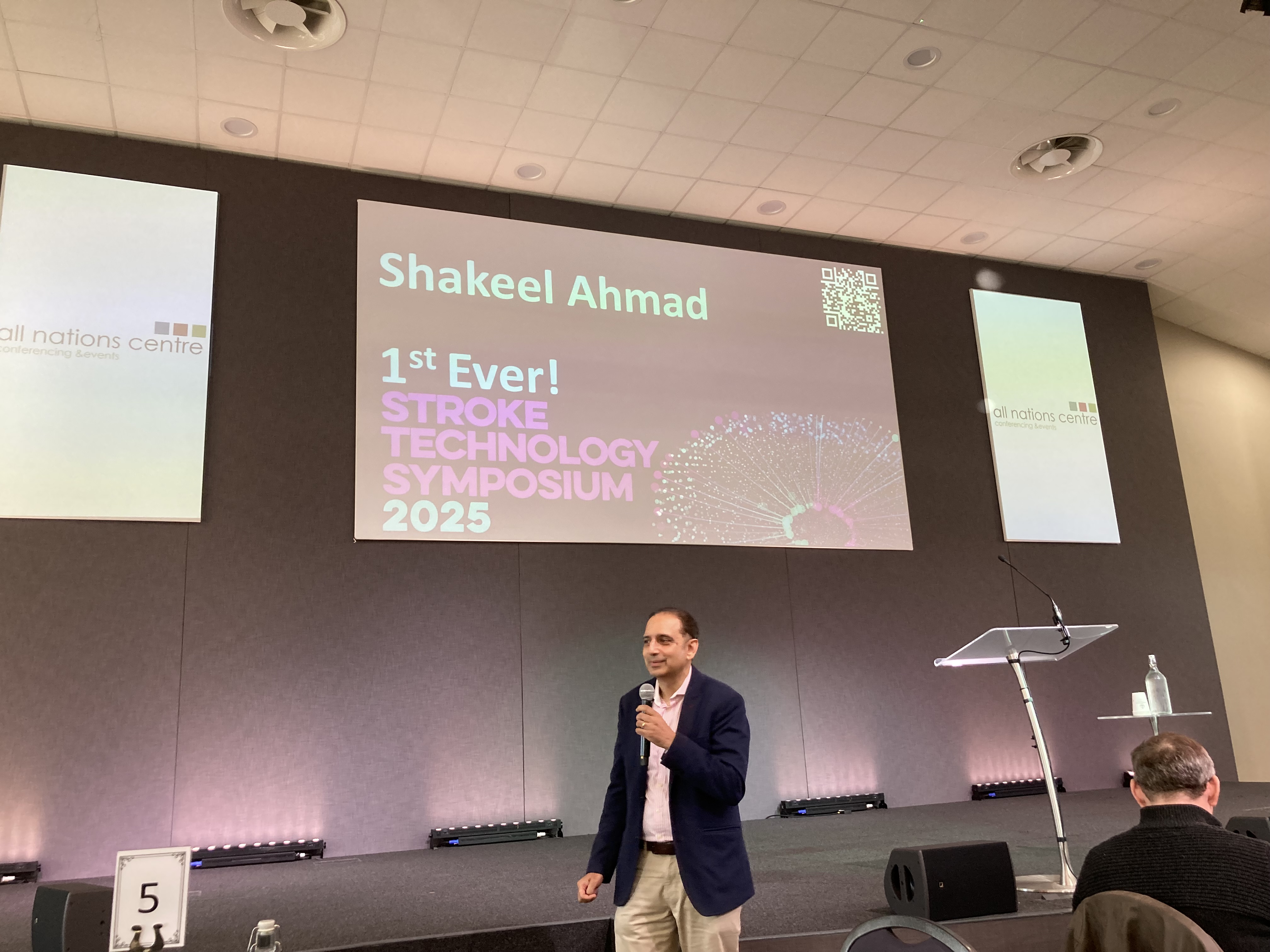
More than 160 clinicians, digital and technology innovators, and healthcare leaders came together to explore how technology can tackle real‑world challenges in stroke services.
The result: three collaborative projects that will make rehabilitation and recovery easier, safer and more effective, for stroke survivors and the teams who support them.
Dr Shakeel Ahmad, NHS Wales Clinical Lead for Stroke, said,
“It’s fantastic to see three innovative projects now moving forward, each with real potential to improve stroke care for patients and staff across Wales. The Stroke Technology Symposium created the spark for this work bringing people together, generating ideas and showed what’s possible when clinicians and industry partners collaborate. I’m excited to see how these projects develop and the impact they can have on patient outcomes.”
The projects are:
Continuous Activity Monitoring & Movement Assessment – Agile Kinetic and Susan Wilson, Stroke Consultant Therapist, Swansea Bay UHB
This project will enhance a smartphone‑based movement assessment system by adding 24/7 activity monitoring.
What this means for patients:
- clinicians will be able to see how active patients are throughout the day, not just during appointments
- rehabilitation plans can be more personalised and responsive
- patients in rural or community settings will receive more consistent monitoring and support
- earlier identification of problems or setbacks, helping recovery stay on track
Susan Wilson, Stroke Consultant Therapist, Swansea Bay UHB, said,
“This funding will provide an opportunity for us to work collaboratively to develop a digital solution to monitor activity levels for stroke survivors. The technology will enable us to track activity both in hospital and the community, helping us to monitor individuals and adjust treatment programmes to meet their needs.”
Pharyngeal Electrical Stimulation (PES) for Dysphagia - Natalie Lennard, Clinical Lead Speech and Language Therapist, Stroke Rehabilitation, Cardiff and Vale UHB
Cardiff and Vale UHB will introduce Phagenyx, a non‑invasive treatment for post‑stroke dysphagia (difficulty swallowing).
What this means for patients:
- faster, safer recovery of swallowing function
- reduced risk of aspiration pneumonia and other complications
- fewer patients needing feeding tubes
- shorter hospital stays and improved quality of life
- access to a treatment option not currently available in most stroke services
Research Prototype: AI Digital Platform for Upper Limb Rehabilitation, Post-Stroke- ReNeural & Sushmita Mohapatra, Consultant Therapist, Stroke Services, Betsi Cadwaladr UHB
This project will develop a bilingual digital platform to support self-practice of stroke affected upper limb rehabilitation at home and in hospital.
What this means for patients:
- personalised exercises tailored to each person’s goals and abilities
- self-monitoring of progress with reminders and motivational prompts to help patients stay engaged
- remote support from clinicians, reducing resource use from the NHS and minimising gaps in care after discharge
- better continuity between hospital‑based and home‑based rehabilitation
- more opportunities for practice, which is key to regaining movement and continuity of recovery in the long term
Sushmita Mohapatra, Consultant Therapist, Stroke Services, Betsi Cadwaladr UHB, said:
“Being awarded funding for our project is incredibly exciting. Upper limb recovery is an area where many stroke survivors struggle to access consistent support, especially once they leave hospital. Developing an AI digital platform that can guide, motivate and connect patients with clinicians has the potential to make a real difference to people’s recovery journeys. I’m delighted we can now take this work forward.”
The projects were selected following a competitive assessment process, where a panel of clinical, digital and innovation experts reviewed all proposals against criteria including patient benefit, feasibility, innovation and potential for impact across Wales
Niki Turner, NHS Wales Allied Health Professional Lead for Stroke, said,
“The chance for clinical colleagues to really describe their challenges and to work in collaboration with each other and with industry partners is welcomed. This has been an extremely exciting time for stroke services in Wales, particularly as the successful projects are all focused on rehabilitation and recovery from stroke. I can’t wait to see the results and hopefully more future investments.”
Siôn Charles, Head of Strategy and Service Planning at the South West Wales Regional Joint Committee, said:
“These projects show exactly what can happen when clinical teams and technology partners come together with a shared purpose. The Symposium created the space for honest discussion and creative thinking, and it’s exciting to now support these ideas as they develop into real solutions for stroke care in Wales.”
The Stroke Technology Symposium was delivered with the support of NHS Wales, Welsh Government, the National Stroke Innovation and Improvement Group, Life Sciences Hub Wales, MediWales and the South West Wales Regional Joint Committee.