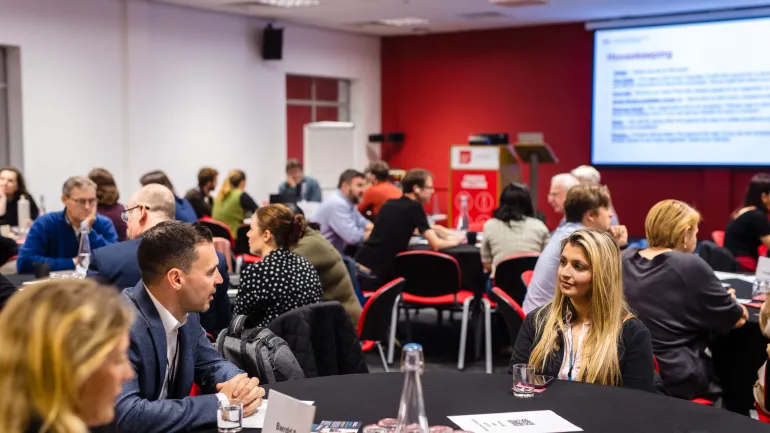
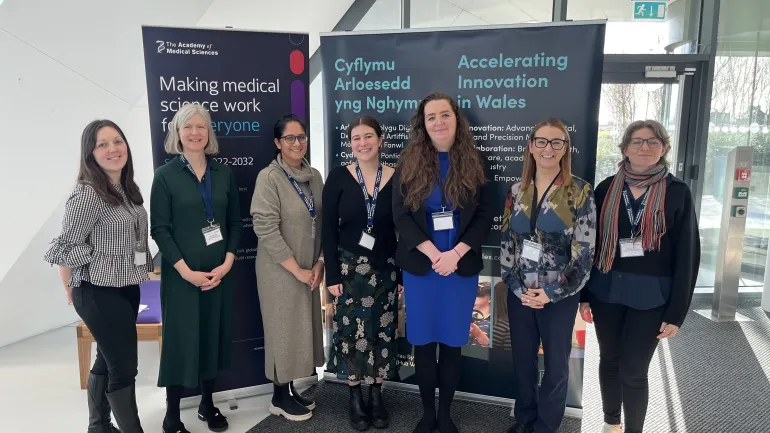
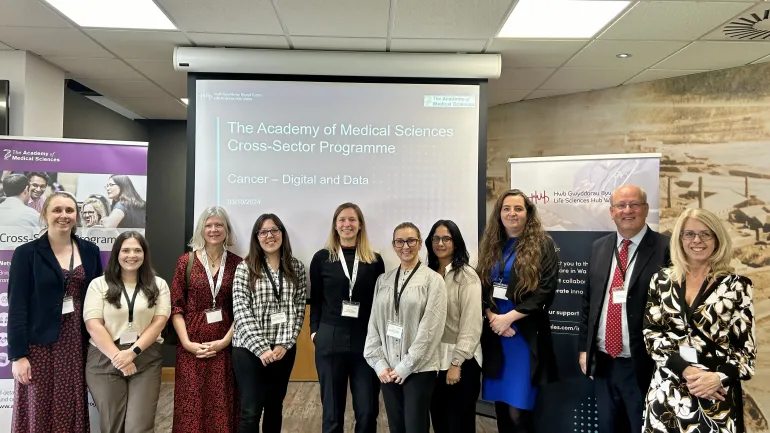
Our recent north Wales event co-led with the Academy of Medical Sciences brought together colleagues from across NHS and social care, academia, third sector organisations, and industry to explore how collaboration can help advance cancer innovation in primary care.
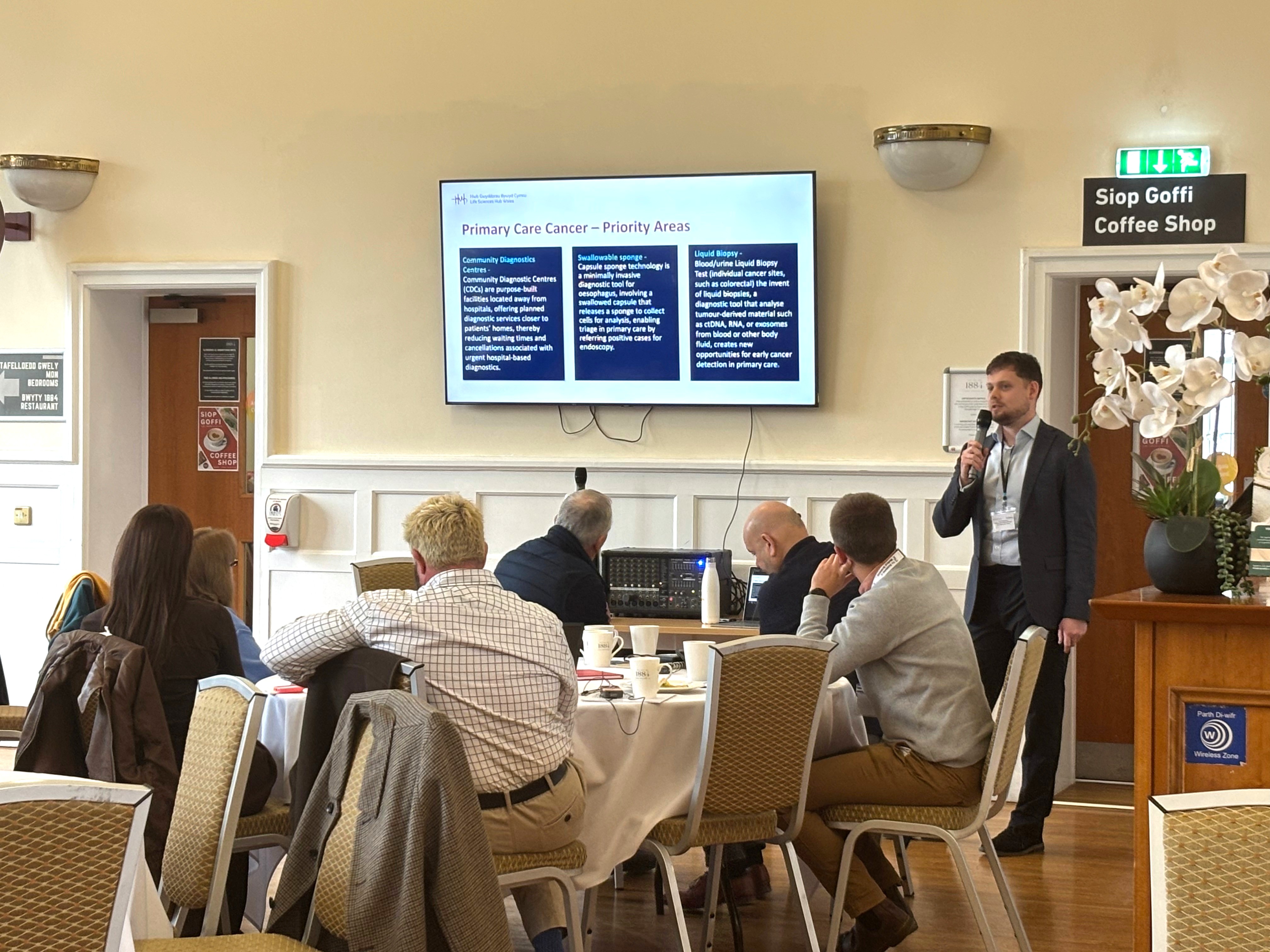
Across the day, attendees shared a strong recognition that cancer pathways have become increasingly complex, and that collaborative, system-wider approaches offer real opportunity to improve outcomes and patient experiences.
Primary care cancer innovations
Dr Elaine Hampton, GP Facilitator, Betsi Cadwaladr University Health Board, reflected on how secondary care has become more specialised over the past 30 years, with surgeons and clinical teams now focusing on smaller parts of the body. While this benefits treatment, it can make it more challenging for GPs to know where to refer urgent suspected cancer cases. Alongside this, Elaine discussed changing demographics and lifestyle factors continue to increase demand for investigations, leading to longer waiting lists and growing pressure across services.
Speakers emphasised the balance between following NICE guidelines and applying clinical judgement – particularly when trying to increase early diagnosis without overwhelming already stretched services. Patient advocates also highlighted that younger or asymptomatic individuals can find it harder to enter pathways when their presentations don’t neatly match clinical criteria, emphasising the importance of supportive and flexible decision-making in primary care.
Integrating innovation in the pathway
One key theme throughout the event touched on how new innovations and diagnostic tools should be used within existing pathways. Discussions explored whether innovations should be used sequentially or in parallel with other diagnostic tests, and the impact that pathway design has on speed, accuracy and efficiency of diagnosis. GPs reinforced the value of having systems such as rapid diagnostic centres, that can support suspected cancer cases and reduce the need for GPs to maintain detailed knowledge of every available test, especially as they increasingly stretched to be “experts across all areas.”
When discussing how innovations fit within the existing pathways, several speakers emphasised the importance of understanding not only when tools and tests should be used, but also how wider factors shape the patient journey. An example raised during the panel discussion highlighted at present, patients in north Wales are being sent to London for prostate cancer (robotic surgery). This reliance on highly specialised surgeons based outside of Wales requires extensive travel for patients and introduces additional cost and logistical pressures.
This prompted a broader question around cost-effectiveness, balancing out the cost of travelling and getting the expertise in London, against the potential value of developing local capacity to deliver these treatments and expertise in north Wales. Considering where expertise is located raised wider questions about where investment should be focussed to support primary care decision-making and the diagnostic pathway.
Panel: Shared perspectives
The panel brought together cross‑sector perspectives, each highlighting the pressures and opportunities that shape cancer innovation in primary care. Despite coming from different backgrounds, the messages they shared aligned closely.
An ABHI panel member spoke about the need to refine clinical pathways and improve triaging, reflecting many of the earlier points raised about the complexity of navigating cancer diagnosis and the impact this has on both patients and clinicians.
From a GP perspective, there was recognition that specialised secondary care can make it more difficult to navigate and connect with primary care. While diagnostic tests can be helpful, they may also unintentionally create barriers, where rigid thresholds may reduce flexibility in referral decisions, making onward referral to secondary care more challenging. This means that in some cases, patients are referred back to primary care, risking delays that narrow the early-detection window, and may lead to more advanced cancer by the time further tests are carried out.
The patient panel member reinforced the importance of getting people through the GP door and strengthening advocacy for those who may not always meet clinical criteria. Their contribution tied into the strong attendee feedback that having patient representatives at the event was “a game changer”, bringing clarity to where systems can do more to support people entering the diagnostic pathway.
Insights from the ThinkCancer! trial
The ThinkCancer! team presented an overview of their study, across practices in Wales and parts of England, building on a five-year programme at Bangor University. The trial explores whether the ThinkCancer! intervention can improve cancer diagnosis and referral rates and deliver cost-effective improvements in patient outcomes.
The study aims to support GPs in recognising possible cancers earlier. It brings practice teams together for workshops, to measure the time between a patient’s first GP visit with a possible cancer symptom to hospital referral. From gathering data from symptom onset, referrals and diagnosis, the study will aim to understand the reasons behind delays.
Opportunities for Wales
Throughout the event, there was a clear sense that Wales is in a strong position to progress cancer innovation in primary care. This includes a move towards unified primary and secondary systems, offering opportunity to strengthen data collection and streamline pathways. The aim is to build on what already works within the NHS services, rather than solely focusing on new technologies that could add unwanted variation to the pathway and workload on NHS staff.
Workshop discussions suggested appointing “local champions” across departments to support collaboration, maintain momentum and shared learning. While funding and system challenges remain, there was collective agreement that meaningful innovation includes rethinking pathways, improving diagnostic access and embedding more integrated, patient-centred approaches to care.
Overall, there was a shared understanding that innovation isn’t only about new technology – it also means improving and changing and reshaping pathways. Earlier diagnosis relies on improving access to primary care diagnostics, supporting GPs to interpret results, and embedding these actively within clinical pathways to support early detection rates.
The event’s aim was to bring colleagues from across sectors, as part of the AMS cross-sector programme of work, to celebrate cancer innovation work already underway in primary care. Thoughts and inspiring discussions were shared, showing what’s possible when we collaborate and bring colleagues together who are passionate about progressing cancer innovation. Further information will follow from James Bourne, our Partnerships Delivery Manager at Life Sciences Hub Wales, outlining the clinical engagement work he’s supporting to help prioritise and progress cancer innovation in Wales.
Get involved
If you’re interested in collaborating or have an idea to improve cancer outcomes, get in touch at manon.owen@lshubwales.com .