We were delighted to attend and exhibit at NHS ConfedExpo 2026 in Manchester, which brought together leaders from across health, social care, industry and the third sector at a time of significant change for health across the UK.
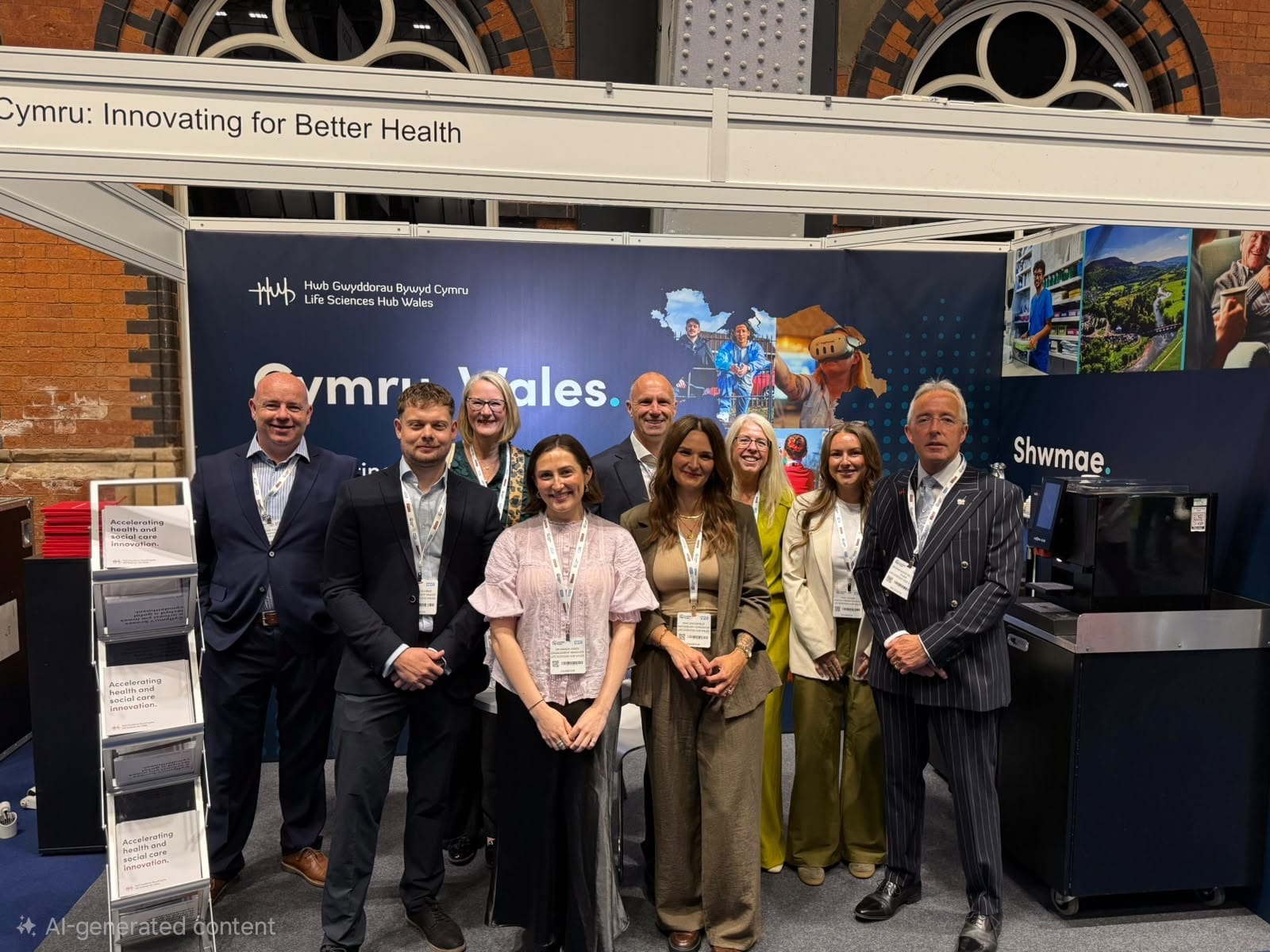

While many of the discussions were shaped by NHS England policy, including the 10-year plan and National Cancer Plan, the themes explored across the event are highly relevant to Wales. Workforce pressures, earlier diagnosis, health inequalities, digital transformation and the challenge of moving innovation from pilots into practice are shared priorities across health and social care systems.
For us, the event was an opportunity to reflect on how these wider conversations connect with our work in Wales: supporting collaboration, helping partners respond to system need, and enabling innovation to reach the people and communities who could benefit most. This blog shares a snapshot of the key themes that stood out to us, from innovation adoption and AI-enabled learning to cancer care, neighbourhood health and tackling inequalities.
What system change means across the UK
The NHS England 10-year plan shaped many of the conversations at ConfedExpo, with discussions focussing on neighbourhood health, workforce, quality, productivity and changes to the operating model. In the Chair’s welcome, Lord Victor Adebowale CBE, Chair of the NHS Confederation, described the moment as one for both “change and opportunity”, while Sir James Mackey Chief Executive Officer, NHS England, reflected on the need to simplify, strip back complexity and bring people together around a clear purpose.
Although the plan applies to England, the pressures driving these conversations are familiar in Wales. Health and social care systems are being asked to improve access, reduce variation, support the workforce and make better use of innovation, while responding to increasing demand and constrained resources. For Wales, the value lies in understanding the approaches, partnerships and models of delivery being tested elsewhere, and considering what learning could support innovation adoption here.
Moving innovation beyond pilots to population impact
A recurring theme across several sessions was the challenge of moving beyond pilots and into sustained, system-wide adoption.
The “Pilotitis to Progress session” highlighted this issue, asking why many proven innovations remain stuck at pilot stage despite evidence that they can improve outcomes. Speakers stressed that despite this, progress can stall due to short-term funding pressures, fragmented decision-making and a system focussed on immediate cost rather than long-term value. The issue is not always whether innovation works, but whether systems are set up to adopt it, fund it and scale it. Speakers highlighted the need to “capture the full value of innovation – not just what it costs today, but what it can unlock across the whole system.”
This was also reflected in the population health session led by AstraZeneca, which explored how local success can be scaled nationally. Examples included LUCID, a kidney programme that demonstrates how an initiative can prove impact locally before expanding across multiple regions. Similarly, the Respiratory Transformation Partnership is working at a national level to improve outcomes for people with asthma and Chronic Obstructive Pulmonary Disease (COPD), showing how coordinated approaches can support earlier detection, reduce variation in care and create capacity across the system. These examples reinforce that the challenge is not simply to generate more innovation, but to create the conditions for it to spread and reach the communities that could benefit most.
AI in practice: personalised learning, workforce skills and safe adoption
AI was one of the most prominent themes at this year’s conference, but the most compelling discussions were those that focussed on practical, real-world use.
The Health Education and Improvement (HEIW) session “Can AI deliver personalised learning at scale? Lessons from NHS Wales”, offered a strong example of how NHS Wales partners are contributing to wider conversations about safe, practical AI adoption, and how it’s already being used to support workforce development.
Speakers from HEIW and Cardiff University School of Medicine shared how ‘AI mentors’ can provide one-to-one, tailored support for people working across busy clinical and administrative roles. HALI, the Healthcare AI Learning Interface, was presented as a tool that can assess a user’s role, knowledge and learning needs before providing personalised support. The Genomics Wales Education Mentor, GWEN was also highlighted as a newly-launched tool supporting learning in an area where knowledge and practice are evolving quickly.
What stood out was the focus on scale and accessibility. The challenge, speakers noted, is not understanding the value of personalised learning, but delivering it consistently across a large and diverse workforce. AI offers an opportunity to provide flexible, on-demand learning that fits around people’s roles while building confidence and capability.
This shift is also being reflected in education. Cardiff University School of Medicine is embedding AI into the undergraduate medical curriculum, helping to prepare future doctors to work safely alongside AI-enabled systems. Student feedback also pointed to a shift away from passive, lecture-based models towards more interactive, personalised approaches to learning.
Cancer, neighbourhood health and tackling inequalities
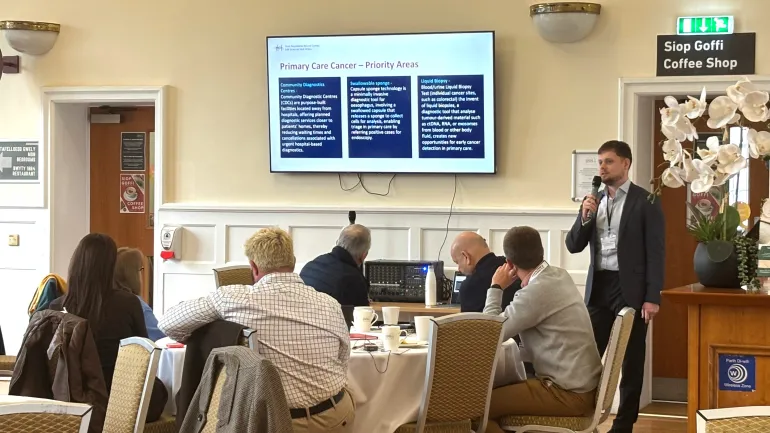
While much of the cancer discussion was framed around England’s National Cancer Plan, the underlying challenges are highly relevant to Wales, including earlier diagnosis, joined-up pathways, equitable access and support throughout a person’s cancer experience.
Discussions focussed on how systems can move from ambition to delivery by speeding up diagnosis and treatment, reducing variation and designing innovation with scale in mind from the outset. As one speaker noted, there is a need to learn across systems, rather than repeating similar work in different ways — “why do something 20 times in different ways when we can do it once?”
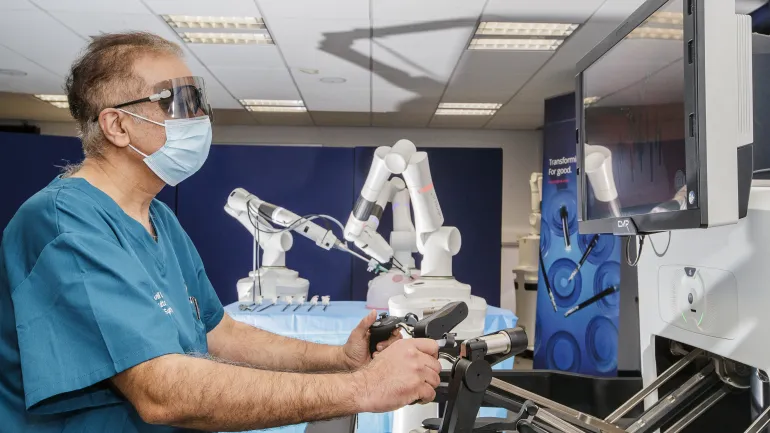
Lung cancer screening was highlighted as an example of a flagship programme in England that has been successfully implemented at scale, offering useful learning for how services can be designed, delivered and expanded. This connects closely with the Tackling Cancer Programme, which is focused on accelerating the adoption of proven treatments and technologies that can support faster diagnosis, improve clinical referral pathways and respond to real service pressures in Wales. Through clinical engagement with NHS professionals across Wales, the programme is helping to identify where innovation can best support the system and improve outcomes for people affected by cancer.
Alongside this, the discussion on neighbourhood health reinforced the importance of trust, relationships and community voice. The Macmillan Cancer Support session highlighted the need to design services with communities, not for them, while strengthening the role of voluntary organisations and people with lived experience. This links to our partnership work with Macmillan Cancer Support in Wales, where we’re exploring unwanted variation across prevention, diagnosis, treatment and outcomes.
The sessions at ConfedExpo were underpinned by the ongoing challenge of health inequalities. The gap in life expectancy between more and less deprived communities was highlighted, reinforcing the need for new models of care to focus not only on efficiency, but on improving outcomes for those facing the greatest barriers. These conversations in Wales and across the UK are helping us to understand where innovation, collaboration and shared best practice could support more consistent, person-centred care across Wales.
From innovation to impact
Across the sessions attended, a consistent message came through clearly. The future of health and social care will not be shaped by innovation alone, but by how well it’s scaled, embedded and adopted.
For Life Sciences Hub Wales, the value of attending lies in bringing this learning back to Wales and connecting it with our own work: supporting collaboration, helping partners respond to system need and enabling innovation to move from evidence to practice. The opportunity now is to build on these conversations, particularly through the Tackling Cancer Programme, our clinical engagement and wider partnership work, to help deliver the Welsh Government's priorities - responding to system need and ensuring innovation reaches the people and communities who could benefit most.